Cheap Meal Prep for Weight Loss: A Flexible Weekly System
Primary focus: cheap meal prep for weight loss. Meal prep does not need expensive containers, complicated recipes, or a refrigerator full of identical meals. A useful system lowers the cost and effort of making a satisfying choice on ordinary days while leaving room for appetite, schedule, culture, and changing plans.
Contents
Quick answer
Cheap meal prep for weight loss works best when it combines a few affordable staples with flexible portions and a backup plan. Start by choosing two proteins, two vegetables, one or two filling staples, and a flavor option that can be used in several meals. Cook only enough for the days you can reasonably eat the food. Keep one freezer or pantry backup for nights when the plan changes. This approach reduces takeout pressure without creating a rigid menu.
A weight-management meal does not have to be tiny or bland. Satisfaction comes from the combination of flavor, texture, protein, fiber, volume, and enough energy for the person eating it. The right balance varies, and people following keto or another lower-carbohydrate pattern may choose different staples from someone who includes grains or beans. The method is more important than one prescribed ingredient. For more structure around repeated habits, visit Routines, and use Tools if you need to estimate portions or calories carefully.
| Meal-prep layer | Affordable options | How to keep it flexible |
|---|---|---|
| Protein | Eggs, beans, lentils, canned fish, chicken thighs, tofu, yogurt, or leftovers. | Cook or portion two choices rather than one large batch. |
| Produce | Frozen vegetables, cabbage, carrots, onions, seasonal produce, or canned tomatoes. | Use one cooked option and one raw or quick option. |
| Filling base | Potatoes, oats, rice, beans, whole grains, or lower-carbohydrate vegetables. | Adjust the portion to hunger, activity, and eating preference. |
| Flavor | Garlic, herbs, spice blends, salsa, vinegar, yogurt sauce, or a small amount of cheese. | Change the flavor so leftovers do not feel identical. |
Set a food budget that reflects real life
Begin with what you already spend, not with an ideal number that makes the plan impossible. Look at one or two weeks of food receipts and separate groceries, restaurant meals, snacks, drinks, and impulse purchases. The purpose is not to judge the spending. It is to see where a small preparation habit could save money. If lunch is the most expensive category, prep lunch components first. If evening takeout is the problem, prepare a quick dinner backup.
Use unit prices when comparing foods. A larger package is not automatically cheaper if it spoils before you use it. Frozen vegetables, dried or canned beans, eggs, oats, cabbage, carrots, potatoes, plain yogurt, canned fish, and store-brand staples can be useful, but the best choice depends on access, food safety, allergies, and preference. MyPlate’s budget guidance emphasizes planning, comparing products, buying only what you can use, and stretching meals with foods such as beans and frozen vegetables.
Budget meal prep also includes the cost of time. A recipe that requires six specialty ingredients may be expensive even if each ingredient is cheap. Choose methods that create several meals from one cooking session: a sheet-pan combination, a pot of soup, a skillet, a slow cooker, a tray of eggs, or ingredients that can be assembled without cooking. Keep your equipment and energy in mind. The best recipe is one you will actually make after work.
Do not remove every enjoyable food in the name of saving money or losing weight. A plan that leaves no room for satisfaction can lead to repeated spending on unplanned snacks or takeout. Include a small, intentional portion of a food you like when it fits your needs. Sustainable budgeting is not the same as permanent deprivation.
Use a mix-and-match formula
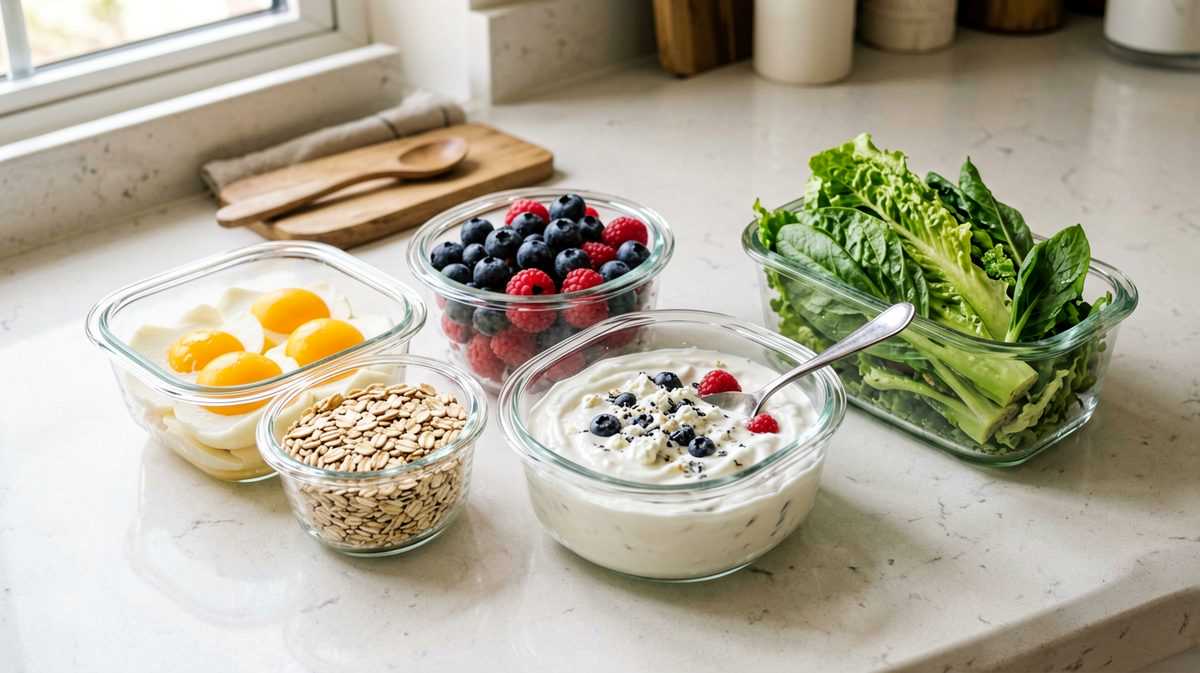
Choose one anchor meal for each part of the day. For breakfast, this might be eggs with vegetables, plain yogurt with fruit and seeds, or an overnight oat variation. For lunch, use a bowl or wrap formula. For dinner, use a protein, two vegetables, and a flexible base or sauce. Snacks can be simple and optional. The formula gives you a default without telling you that every person should eat the same thing.
Think in components rather than completed meals. Cook chicken or tofu, roast vegetables, wash salad greens, and prepare a sauce. On one day, assemble a bowl; on another, add the same components to a soup or skillet. For a lower-carbohydrate plan, use cauliflower, cabbage, greens, mushrooms, or another preferred vegetable as the base. For someone who includes grains or potatoes, portion them separately so the meal can be adjusted without cooking twice.
Portion food after considering appetite and activity. Pre-portioned containers can help some people, but they can also be too rigid. Store components in larger containers and assemble a serving when you eat if that gives you more flexibility. If you use containers, choose sizes that make sense for the food and the meal rather than trying to make every container identical.
Flavor is a budget tool. A batch of beans, chicken, or vegetables can take on different identities with salsa, curry spices, lemon and herbs, soy sauce, chili, garlic, or yogurt sauce. Make one base flavor neutral enough to adapt. This reduces food boredom and lowers the temptation to buy a completely different meal every day.
Shop for flexibility
Write the plan after checking the calendar. Count workdays, late shifts, social meals, exercise sessions, and days when cooking is unlikely. Buy enough for the meals you will probably eat, not for an imaginary week with unlimited time. Add one freezer meal or shelf-stable backup. A backup is not a failure of preparation; it is what prevents one late meeting from becoming a costly order.
Use a short list with categories: protein, produce, filling base, flavor, and backup. Check the pantry before shopping. Choose the store brand where quality is similar, compare unit prices, and buy frozen or canned produce when it reduces waste. If fresh produce is on sale, plan when you will use it. If a package is too large, split it immediately or freeze part of it.
Food safety matters. Refrigerate cooked food promptly, use shallow containers when appropriate, label dates, and freeze portions you will not eat within a safe period. When in doubt about storage or temperature, follow current local food-safety guidance. Saving money is not worth eating food that may be unsafe.
A two-hour preparation routine
First fifteen minutes: set up. Read the plan, clear space, wash produce, preheat the oven if needed, and start the longest cooking item first. Put a timer where you can see it. Choose one cutting board or work area for produce and keep raw ingredients separate according to food-safety practice.
Next forty minutes: cook the anchors. Start a pot, tray, or skillet for the main protein and filling base. While they cook, chop vegetables and prepare a sauce. Use seasonings that work across meals. If you are cooking eggs, beans, fish, poultry, or tofu, follow the appropriate preparation and storage guidance for that food.
Next thirty minutes: prepare fast components. Wash greens, portion yogurt or snacks, slice a few vegetables, and set aside freezer portions. Do not prepare seven identical meals if you know you dislike leftovers. Prepare three or four lunches and leave the rest as components.
Final thirty-five minutes: pack and reset. Let hot food cool appropriately before sealing according to food-safety guidance, label containers, and place the first meals where they are visible. Put the backup in a known location. Clean enough of the kitchen that the next cooking session does not begin with a large obstacle. Write down what you would change next week.
Handle busy days and leftovers
Use a three-level plan. Level one is the prepared meal. Level two is a fast assembly using prepared components. Level three is the backup meal. For example, level one may be chicken, vegetables, and rice; level two may be yogurt, fruit, nuts, and a boiled egg; level three may be canned fish with a bagged salad or a frozen meal that fits your needs. A tiered plan protects the habit when the day does not cooperate.
Leftovers become easier when you change texture and flavor. Turn cooked vegetables into an omelet, add a sauce to a bowl, put beans into a soup, or use a small portion of leftovers alongside a fresh salad. If you do not like leftovers, cook smaller amounts more often or freeze half the batch. The goal is not to prove that you can tolerate a food; it is to make the next meal easier.
Review the plan with neutral questions: Which food was satisfying? Which spoiled? Which meal required too much effort? Which item was cheap but not enjoyable? Adjust the next shopping list. A budget meal-prep system improves through small corrections, not through a perfect menu written once.
Questions readers ask
Can cheap meal prep help with weight loss?
It can help by making planned food more available and reducing expensive impulse meals, but it does not guarantee weight change. Portions, hunger, activity, health, and the overall pattern still matter.
What are the cheapest proteins?
Options vary by location, but eggs, beans, lentils, tofu, canned fish, plain yogurt, and some cuts of poultry are often useful. Choose foods that you can store, prepare, and enjoy safely.
Should I eat the same meals every day?
No. Repetition can reduce effort, but variety in flavors and components may make the plan easier to sustain. Prepare a base that can be assembled in more than one way.
How many days of food should I prep?
Start with the number of days you can realistically eat the food before it loses quality. Three or four days may be better than preparing a full week and wasting half of it. Freeze extra portions when appropriate.
Related reading
Use Routines for repeatable planning, then visit Weight maintenance for appetite and habit review. If movement is part of your week, see Walking. Use Tools carefully, and review the Editorial policy and Disclaimer for scope and limitations.
Editorial note: This article is general education, not individualized medical, dietetic, or fitness advice. Food needs vary by person, health, culture, budget, and activity. Seek qualified guidance for medical diets, pregnancy, eating-disorder concerns, allergies, or significant unintentional weight change.