Easy Meal Prep for Weight Loss: A Flexible Weekly System That Survives Busy Days
Primary focus: easy meal prep for weight loss. Meal preparation is most useful when it reduces friction without forcing every day to look identical. A sustainable system should help you make satisfying meals during a busy week, preserve flexibility for restaurants and family meals, and provide a backup when cooking does not happen. The purpose is not to create a perfect menu; it is to make the next reasonable choice easier.
Quick answer
Choose two or three meal components that can be combined in different ways: a protein source, a vegetable or fruit, a carbohydrate or other satisfying base, and a sauce or flavoring. Prepare only enough for the days you can predict, then keep convenient backup foods available. Use portions and hunger cues rather than assuming the same amount works for everyone. Review energy, appetite, budget, and waste at the end of the week.
For a breakfast-focused system, see breakfast meal prep for weight loss. For the broader goal of keeping results stable, visit Weight maintenance.
| Component | Examples | Preparation idea |
|---|---|---|
| Protein | Eggs, Greek yogurt, beans, fish, poultry, tofu, or another tolerated choice. | Cook a batch or keep no-cook portions ready. |
| Produce | Frozen vegetables, salad greens, fruit, roasted vegetables. | Wash, chop, or portion only what will be used. |
| Satisfying base | Potatoes, rice, oats, whole-grain bread, or another preferred option. | Prepare a neutral base that can take different flavors. |
| Flavor and backup | Salsa, herbs, soup, nuts, canned fish, or a shelf-stable meal. | Keep a low-effort option for late or stressful days. |
Start with a meal-prep job, not a complicated menu
Decide what problem you are trying to solve. Maybe breakfast is rushed, lunch is bought when hunger is already high, or dinner turns into delivery after a long commute. Choose the meal with the most friction and prepare for that one first. A system that solves a real problem is easier to maintain than a Sunday cooking project built around an imaginary perfect week.
Use a two-layer plan. The first layer is a default meal assembled from prepared components. The second is a flexible meal that uses the same components with a different flavor or format. For example, cooked chicken, roasted vegetables, and a grain can become a bowl, a wrap, a salad, or a soup addition. This prevents boredom and reduces the pressure to follow a strict menu.
Make a short list before shopping. Include foods for the first half of the week, one or two fresh items, a frozen or canned backup, and ingredients for a meal that requires almost no cooking. Check what is already at home. Buying fewer, more usable ingredients can reduce cost and food waste while making the plan easier to see.
Build balanced meals without false precision
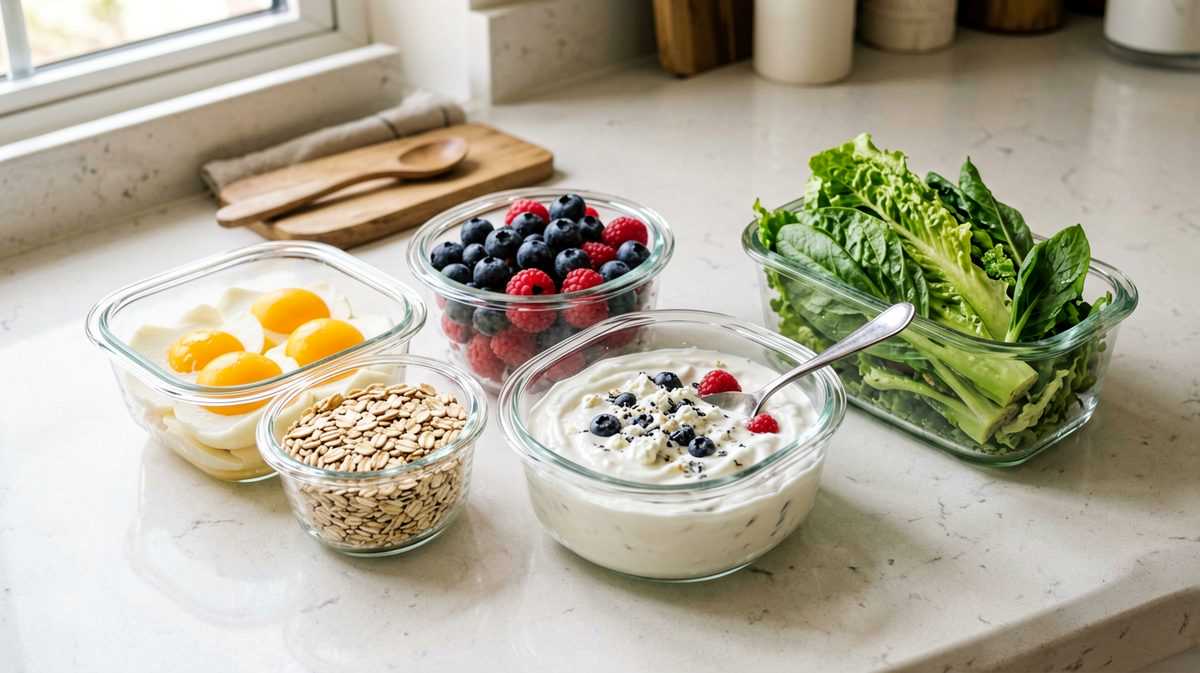
A meal-prep container does not need to have identical compartments or a precise number of calories. Start with a protein anchor, add produce for volume and fiber, include a satisfying carbohydrate if it suits your preferences and activity, and add fat or sauce for flavor. Portion size can be adjusted based on hunger, body size, activity, medical needs, and professional guidance.
Protein can make meals more satisfying and can fit many patterns: eggs, dairy, poultry, fish, beans, tofu, tempeh, or other foods. Fiber-rich produce can add texture and volume. If you use a lower-carbohydrate pattern, choose vegetables, protein, and fats that support satisfaction rather than removing foods without a replacement. If you have diabetes, kidney disease, food allergies, or another condition requiring specific nutrition, follow individualized advice.
Use taste as part of adherence. Prepare one neutral base, then add two sauces or spice combinations. Keep salt, acidity, heat, herbs, and crunch available. A meal that is technically balanced but unpleasant will not solve a busy-week problem. The best prep is food you are willing to eat on the third day, not only food that photographs well on the first day.
Plan for the days that go wrong
Many meal plans fail because they assume cooking always happens on schedule. Create a “no-cook” shelf or refrigerator zone: yogurt, fruit, canned beans or fish, pre-washed vegetables, whole-grain crackers, eggs, soup, or a frozen meal that fits your preferences. The backup does not have to be perfect. It needs to be safer and more satisfying than waiting until hunger is urgent.
Use a three-level system. Level one is a fully prepared meal. Level two is an assembled meal made from prepared components. Level three is a minimum meal made from convenient foods. All three are part of the same plan. If you only accept level one, one late meeting can turn into a week of improvisation.
Restaurants can also fit. Before ordering, look for a protein source, a vegetable or fruit, and a portion that feels appropriate. Save part for later if the serving is large, or choose a smaller option. Do not compensate by skipping the next meal. Returning to the usual rhythm is more helpful than adding punishment.
Use a weekly review to improve the system
At the end of the week, review four things: what was eaten, what was wasted, what was convenient, and what created friction. If breakfast was easy but lunch was not, shift preparation toward lunch. If vegetables spoiled, buy frozen or prepare less. If hunger appeared in the afternoon, add a planned snack or strengthen the earlier meal. These are design clues, not character judgments.
Keep portions and ingredients flexible enough to match different days. A more active day may need a larger meal, while a low-appetite day may call for a smaller portion and a later snack. Hunger is not a problem to silence automatically, and fullness is not a target to ignore. Learn the pattern that supports energy and regular eating.
Cost matters. Compare price per usable portion, not only the sticker price. Beans, eggs, oats, frozen vegetables, canned fish, seasonal produce, and store-brand basics can be useful for many budgets. Buy specialty items only when they solve a specific problem. Meal prep should make the week more manageable, not create financial pressure.
Common meal-prep mistakes
- Preparing seven identical meals when you already dislike repetition.
- Using an ambitious recipe list that takes more time than the week allows.
- Skipping backup foods and assuming every meal will be cooked.
- Making a portion so small that hunger leads to unplanned eating later.
- Calling a restaurant meal a failure and abandoning the rest of the plan.
Replace these patterns with two or three components, flexible flavor options, and a backup level. Use Tools if you want to estimate a target, but do not let a spreadsheet replace hunger awareness and common sense. A useful plan can be measured, adjusted, and enjoyed.
Questions readers often ask
How many days ahead should I meal prep?
Prepare only as far ahead as your schedule and food-safety habits support. Many people find two to four days easier than preparing an entire week of identical meals.
Does meal prep have to be low calorie?
The plan should support your health and goal, not force an arbitrary minimum. Meals need enough energy and satisfaction for the person eating them, and medical needs should be handled with professional guidance.
What if I get bored?
Repeat components rather than full recipes. Change sauces, herbs, textures, and formats while keeping the grocery list manageable.
Related reading
Continue with Routines, then read a flexible low-cost meal-prep system. For activity planning, visit Walking and Strength and muscle. For editorial scope, see the Editorial policy.
Keep preparation proportional to the week
Meal prep should scale with the demands of the week. During a quiet week, you may cook a batch of protein and vegetables. During a hectic week, washing fruit, portioning snacks, and stocking two ready-to-eat meals may be enough. If you are feeding other people, prepare a shared base and let each person add sauces, toppings, or sides. This preserves the household meal without requiring everyone to follow the same target.
Food safety and enjoyment are part of sustainability. Cool and store cooked foods according to local food-safety guidance, label containers when helpful, and freeze portions that will not be eaten in time. If a prepared meal no longer looks or smells right, discard it rather than forcing yourself to use it. A smaller amount of fresh preparation is better than a large batch that creates waste and resentment.
Give yourself permission to revise the menu after you learn what the week actually demands. If mornings are unpredictable, move preparation to lunch. If leftovers are ignored, prepare smaller portions and keep components separate. If a recipe requires too many dishes, simplify the cooking method. Meal prep is a service to your future self, so the system should become easier after each review rather than more elaborate.
Editorial note: This article is general education, not individualized medical, dietetic, or fitness advice. Estimates vary by person, product, preparation, device, and method. Stop activity for concerning symptoms and seek qualified professional guidance for medical, medication, pregnancy, injury, eating-disorder, or chronic-condition questions.