Advanced Weight Loss Bundle: How to Evaluate a Multi-Part Plan Without Overpromising
Contents
Primary focus: advanced weight loss bundle. This guide treats the topic as a practical planning question, not a promise of a specific amount of weight change. It is written for readers who want a clear next step that can fit ordinary meals, movement, recovery, work, family, and changing energy.
Quick answer
a reader is considering an advanced weight loss bundle that combines several foods, supplements, coaching elements, or tracking tools. Start with a manageable version of the routine, use the most reliable information you have, and review the result over enough time to see a pattern. a bundle can make a routine feel organized, but adding more components does not automatically make the plan more effective; usefulness depends on evidence, cost, safety, clarity, and whether the pieces support a repeatable routine. The goal is not to create a perfect day; it is to make the next useful decision easier.
Use Weight maintenance as the home for this topic, but do not isolate it from the rest of life. Food, movement, sleep, stress, access, budget, and health can change the way a plan feels. A reasonable starting point is a written list of what each component is meant to do, what it costs, how it will be reviewed, and which parts can be removed without collapsing the plan. If the first version is uncomfortable or impossible to repeat, simplify the routine before assuming that more discipline is required.
| Decision | Practical starting point | Why it matters |
|---|---|---|
| Purpose | a reader is considering an advanced weight loss bundle that combines several foods, supplements, coaching elements, or tracking tools | Keeps the plan connected to a real problem |
| Anchor | Write down every component in the bundle and separate the core behavior from optional products, claims, coaching, and convenience features. | Creates a repeatable first action |
| Boundary | a written list of what each component is meant to do, what it costs, how it will be reviewed, and which parts can be removed without collapsing the plan | Prevents the plan from expanding without evidence |
| Fallback | a basic version built around regular meals, manageable movement, sleep, recovery, and one tracking method before adding optional products or services | Protects continuity when the day changes |
What this topic is really trying to solve
a reader is considering an advanced weight loss bundle that combines several foods, supplements, coaching elements, or tracking tools. That question often arrives with a simple headline answer, but the useful answer depends on the details underneath it. What is the person actually doing now? What part feels difficult? Is the obstacle time, appetite, confidence, equipment, recovery, cost, or uncertainty? Naming the obstacle keeps the article from turning into a list of unrelated tips.
a bundle can make a routine feel organized, but adding more components does not automatically make the plan more effective; usefulness depends on evidence, cost, safety, clarity, and whether the pieces support a repeatable routine. That does not mean numbers or structure are useless. It means they should be used as tools for learning, not as proof of virtue. A target that looks impressive but produces pain, constant hunger, poor sleep, or repeated abandonment is not a strong target. A smaller plan that can be repeated teaches you more about what fits.
The first useful comparison is between the planned version and the version that happens on an ordinary day. The planned version may include a full kitchen, a quiet hour, perfect weather, and high motivation. The ordinary version may happen after a late meeting, a poor night of sleep, a crowded route, a missed grocery trip, or a change in appetite. Design for both. Keep the main action visible, remove unnecessary steps, and decide in advance what counts as a minimum version.
If you want a closely related perspective, read adaptogens and weight loss. It addresses a neighboring decision without pretending that every reader needs the same method. For a broader planning context, continue to weight-management tools. These links are marked in the HTML so the editorial system can identify the intended internal path.
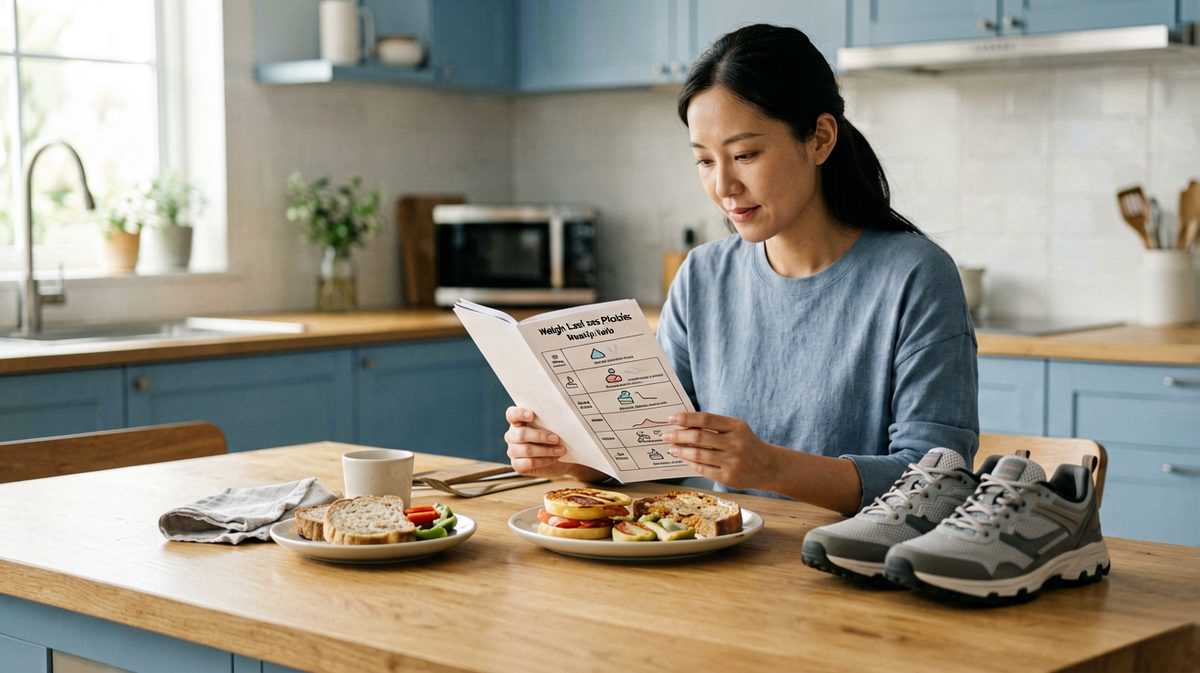
Build the core approach step by step
Start with the smallest useful version. Write down every component in the bundle and separate the core behavior from optional products, claims, coaching, and convenience features. Begin at a level that lets you notice technique, comfort, appetite, or attention. The first session is a data-gathering session, not a final exam. Record only the details that will help you decide what to repeat: time, effort, food timing, equipment, symptoms, and how you felt later that day.
Add one clear progression. Check the evidence, safety information, return terms, recurring charges, and the level of professional support before committing money or changing medication-related routines. Change one main variable while keeping the rest familiar. If you add time, keep the pace stable. If you add load, keep the number of exercises stable. If you change breakfast ingredients, keep the portion and timing recognizable. Single-variable changes are easier to evaluate and easier to undo when they do not fit.
Protect the anchor. Test the smallest useful version for a defined review period so you can identify which part improves planning, adherence, comfort, or confidence. The anchor is the action most likely to keep the routine connected to its purpose. It might be a consistent walk, a protein-containing meal, a conservative tracking method, a scheduled strength session, or a planned rest day. Put it where you can see it, attach it to an existing habit when helpful, and remove friction from the first five minutes.
Plan the fallback before you need it. Create a lower-cost fallback that keeps the main habit intact if a product is unavailable, a subscription ends, or the routine becomes too complicated. A fallback should preserve the central behavior while reducing time, intensity, ingredients, or complexity. It is not a failure version. It is what allows a routine to survive travel, illness, deadlines, weather, soreness, appetite changes, or limited access. Write the fallback in plain language so you do not need to invent it while tired.
Use information without becoming trapped by it. A watch, scale, food label, calculator, or training log can make a pattern more visible, but each tool has error and context limits. the Tools section can help organize an estimate, while a simple plate, time-based session, or weekly review may be better on days when precision is not useful. If tracking makes eating or exercise more anxious, step back and choose a lower-burden method.
Apply the plan across a real week
A sensible week uses the bundle, if it is used at all, as a support layer around ordinary meals and activity rather than as the explanation for every result. Start by placing the anchor on two or three days rather than filling every available slot. Leave space for recovery and ordinary life. The aim is to create enough repetition to learn what works, not so much volume that one missed day feels like a collapse.
When time is limited, keep the component that removes the most friction, such as a prepared shopping list or a simple check-in, and pause decorative extras. Keep ingredients, shoes, equipment, or reminders ready where the first step is visible. A routine that depends on a long setup will be fragile. Consider a lower-effort option, a shorter route, a simpler meal, or a reduced set of exercises. The fallback should still feel like the same routine, just scaled to the day you actually have.
Review adherence, appetite, energy, sleep, cost, side effects, and decision confidence together instead of judging the bundle by a single scale reading. A short weekly review can ask: What was easy to repeat? What created friction? What changed hunger, energy, comfort, or confidence? What should stay the same next week? This turns the plan into a learning loop. It also prevents a single result from becoming a story about personal failure.
Context matters. A change in medication, illness, menstrual cycle, sleep, work schedule, stress, travel, or training load can alter the result without invalidating the whole plan. When the context changes, record it and adjust the expectation. Avoid products that promise rapid transformation, hide ingredients or recurring charges, discourage medical care, or suggest changing prescription treatment without a qualified clinician. If you are unsure whether the issue is ordinary difficulty or a health concern, pause the experiment and ask a qualified professional.
Common mistakes and better replacements
Most problems with advanced weight loss bundle are not caused by a lack of information. They come from applying a reasonable idea too rigidly, choosing a target that is too large, or ignoring the conditions required to repeat it. Watch for the following patterns:
- Assuming a larger bundle must be better than a simple routine
- Paying for several overlapping products before testing the basic behavior
- Treating testimonials as proof that the same result is likely for everyone
- Ignoring recurring costs, ingredient interactions, or the time needed to use every component
Replace an all-or-nothing rule with a visible boundary. Replace a dramatic reset with a short review. Replace a generic recommendation with a version that names the time, place, equipment, food, and recovery requirement. Replace a single metric with two or three signals that reflect the actual goal. This keeps the plan specific without making it brittle.
Also watch for false precision. A calculator may show a decimal, a machine may show a calorie total, or a product page may list an impressive percentage, but none of these automatically describes your exact physiology or future result. Use the information to compare options, then test the plan in real life. The best estimate is the one that improves a decision without encouraging unsafe behavior.
Questions readers often ask
What does an advanced weight loss bundle usually include?
The phrase can describe many different packages, including meal products, supplements, coaching, apps, testing, or equipment. Read the itemized description rather than assuming every bundle has the same purpose or evidence.
Is a bundle more effective than a simple plan?
Not automatically. A bundle may improve convenience or accountability for some people, but its value depends on the quality of the components and whether the routine remains affordable and repeatable.
How should I compare two bundles?
Compare the claims, ingredient and service details, total cost over time, cancellation terms, professional oversight, evidence, and what happens when you stop using the package.
When should I ask a clinician?
Ask before using supplements with medication, making major dietary changes for a medical condition, or following a plan that causes concerning symptoms, severe restriction, or disordered eating behavior.
Related reading
Continue with Weight maintenance, then read adaptogens and weight loss for the closest companion topic. If you need a different type of decision aid, visit the Tools section. For the site’s scope and review standards, read the Editorial policy and the Disclaimer. These internal links use the special editorial marker required for Move & Maintain.
Editorial note: This article is general education, not individualized medical, dietetic, or fitness advice. Estimates vary by person, product, preparation, device, and method. Stop activity for concerning symptoms and seek qualified professional guidance for medical, medication, pregnancy, injury, eating-disorder, or chronic-condition questions.