How to Maintain Weight After Losing It: A Practical Weekly Review System
Primary focus: how to maintain weight after losing it. Maintaining a lower weight is not a single finish line or a test of willpower. It is a routine-design problem: meals, activity, appetite, sleep, stress, social life, and access all need a workable place in the week. The most useful plan is one that still works when the schedule changes, hunger is higher than usual, or motivation is ordinary.
Quick answer
To maintain weight after losing it, keep a small number of repeatable anchors rather than trying to recreate a strict weight-loss phase forever. Use a consistent meal pattern, regular movement, enough recovery, and a short weekly review. Watch a trend over time instead of reacting to one scale reading. If the trend begins moving in an unwanted direction, make one modest adjustment early, observe the result, and avoid turning a small change into an emergency diet.
A maintenance plan should also include a flexible version for travel, holidays, illness, busy work periods, and changes in appetite. The purpose of a fallback is continuity, not perfection. If you want the companion topic on a stalled trend, visit breaking a weight loss plateau. For daily activity ideas, see walking routines.
| Maintenance element | Practical starting point | Why it helps |
|---|---|---|
| Meal structure | Keep familiar meal times and a protein- and fiber-containing base. | Reduces decision fatigue without requiring identical meals. |
| Movement | Choose walking, strength work, or another activity you can repeat most weeks. | Protects routine and fitness without using exercise as punishment. |
| Review | Look at a weekly trend plus appetite, energy, sleep, and adherence. | Prevents a noisy single measurement from driving a drastic response. |
| Fallback | Write a shorter, simpler version for difficult weeks. | Keeps one missed day from becoming a missed month. |
Define what maintenance means for you
Maintenance does not require every day to look the same. A useful definition is a sustainable range of body weight and behaviors that supports health, daily function, and a reasonable quality of life. The range may be influenced by water, sodium, bowel habits, training, menstrual-cycle changes, travel, sleep, and medication. This is why a single measurement cannot tell you whether the overall plan is working.
Start by describing the outcome in observable terms. You might want to keep a stable clothing fit, preserve strength, maintain energy for work and family, or keep a regular walking habit. These details matter because they determine what you need to monitor. If the goal is only a number, the plan may become unnecessarily restrictive. If the goal includes function and wellbeing, you can make better decisions when the scale is temporarily noisy.
It is also useful to separate a desired range from a warning signal. A warning signal could be a steady upward trend for several weeks, a return of chaotic eating, a loss of strength, or fatigue that makes routine activity difficult. A warning is information, not a verdict. It gives you a reason to review meals, movement, sleep, stress, and context before changing anything dramatically.
Build a maintenance meal pattern
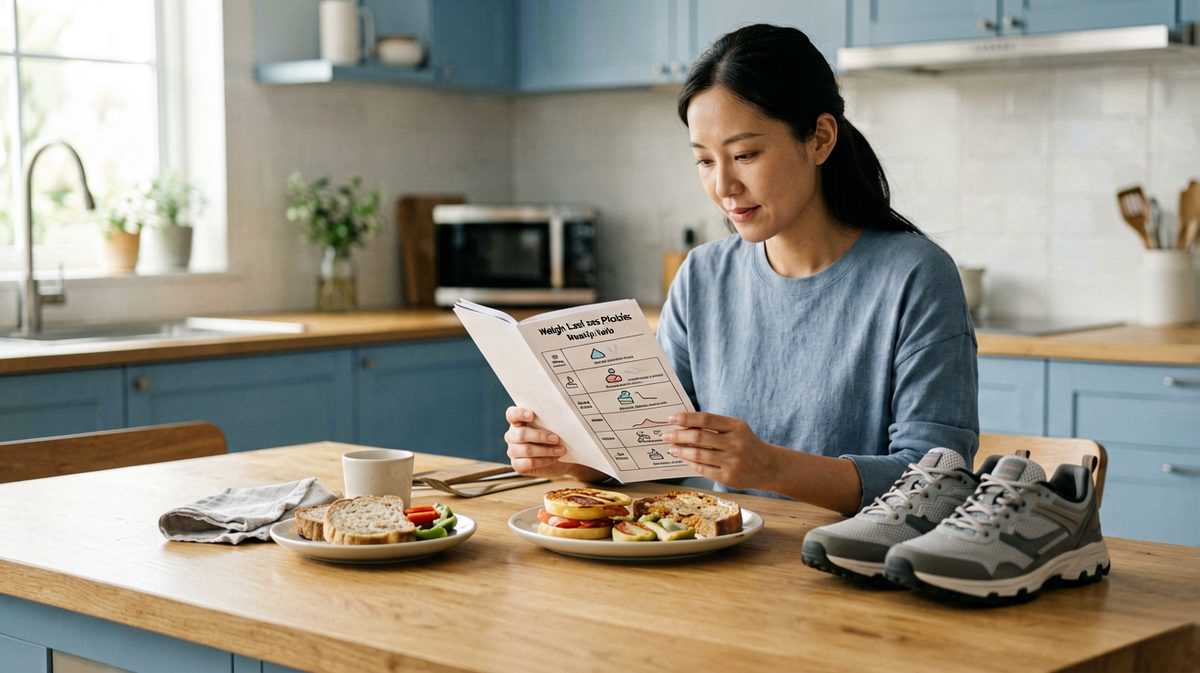
A maintenance meal pattern should be recognizable enough to repeat and flexible enough to survive real life. Begin with a few meal anchors: a breakfast or first meal you can prepare reliably, a lunch structure that works on workdays, and a dinner formula that can change ingredients without changing the overall balance. A plate containing a protein source, vegetables or fruit, a satisfying carbohydrate when appropriate, and a source of fat is one possible framework. It is a framework, not a prescription.
Protein and fiber can make meals more satisfying, but neither needs to become a reason to ignore your preferences or medical needs. Use foods you actually enjoy and can afford. If you dislike meal repetition, repeat a method rather than a recipe: rotate proteins, keep two convenient vegetables available, and use sauces or herbs to change flavor. If cooking time is limited, assemble meals from prepared components and keep a simple emergency option available.
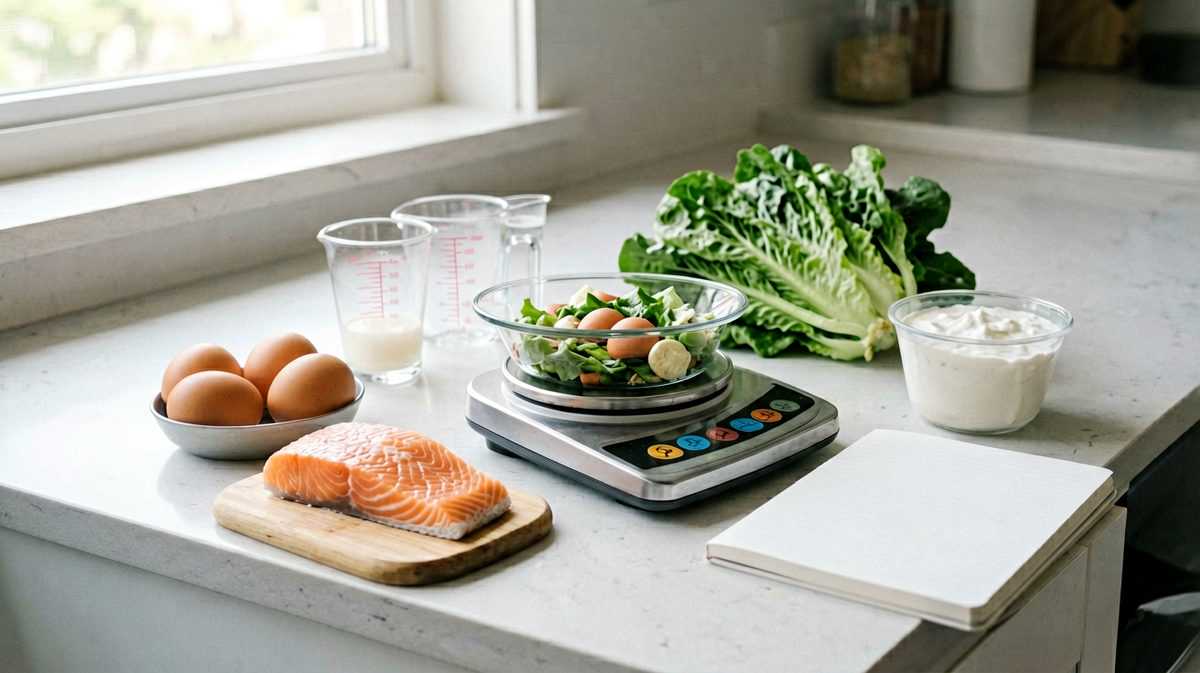
Keep an eye on portions without assuming that every meal must be measured forever. A short tracking period can help you understand what a normal maintenance day looks like, while a hand-size or plate-based method may be easier later. The best method is the one that gives useful information without creating anxiety or making social meals impossible. If tracking increases compulsive checking or distress, step back and seek qualified support.
Plan for eating outside the home. Choose one or two decisions before arriving, such as including a protein-rich option, sharing a large portion, or deciding how much dessert will feel satisfying. Avoid the idea that a restaurant meal must be “earned” or compensated for. A flexible meal can fit into a stable week when the next meal returns to the usual pattern.
Use movement to support the routine
Regular movement can help preserve fitness, mood, confidence, and daily structure. It does not need to be a high-intensity program. Walking, cycling, swimming, resistance training, active transportation, and household activity can all contribute. The most maintainable choice is usually the one with low friction: a route near home, a short strength session with familiar exercises, or a calendar slot that matches your energy.
Strength training is useful when the goal includes preserving or improving muscle and function, but progression should respect recovery. Start with a manageable frequency, use good technique, and increase only one variable at a time. For practical guidance on exercise timing and muscle-supportive habits, see strength and muscle guidance. If soreness or pain changes how you move, reduce the load and seek qualified advice rather than pushing through.
Think in weekly totals rather than a perfect daily streak. A difficult day can still include a ten-minute walk, a few mobility exercises, or a normal bedtime. A longer session can happen on another day if that fits your schedule. A fallback version protects the identity of the habit: you are still practicing the routine, even when the amount is smaller.
Create a weekly review without overreacting
Set aside ten minutes once a week to review the pattern. Look at the same type of measurement under reasonably similar conditions if you use a scale. Then add context: How was appetite? Was sleep disrupted? Did work, travel, illness, or medication change? Was movement lower than usual? Did meals become more irregular? This context makes the number more useful and reduces the chance of blaming yourself for normal variation.
Choose one question for the next week: What is the smallest change that would make the routine easier to repeat? You might prepare one extra lunch, put walking shoes by the door, schedule one strength session, or return to a regular breakfast. Avoid changing food, exercise, sleep, supplements, and tracking all at once. One clear experiment is easier to evaluate and easier to reverse.
If the trend is stable and the routine feels manageable, keep it steady. Maintenance is not improved by constant optimization. If the trend is changing gradually, review the ordinary details before reaching for a severe restriction. Drinks, restaurant portions, weekend timing, reduced steps, poor sleep, and stress can all matter, but they should be considered as clues rather than evidence of failure.
Common maintenance mistakes
- Treating the end of weight loss as permission to abandon every helpful routine.
- Trying to keep a deficit-level intake when the real goal is stability and adequate energy.
- Reacting to one high or low reading instead of looking at a consistent trend.
- Using exercise to compensate for eating rather than to support fitness and wellbeing.
- Having no plan for holidays, travel, illness, or stressful work periods.
A better replacement is a maintenance range, a small set of anchors, and a written fallback. Keep the language neutral: “the routine needs review” is more useful than “I failed.” If weight concerns create compulsive checking, severe restriction, bingeing, purging, or distress, contact a qualified mental-health or nutrition professional.
Questions readers often ask
How long should I stay in maintenance?
Maintenance is not a short break that must end on a certain date. It is the phase in which you practice keeping a stable routine and learn what supports your current needs. The length depends on goals, health, history, and professional guidance.
Should I keep tracking calories?
Some people find short-term tracking informative, while others do better with meal anchors and portion cues. Use the lowest-burden method that provides enough information. Tracking is not required if it harms your relationship with food.
What if my weight changes after a holiday?
Wait for ordinary meals, hydration, sleep, and movement to resume before interpreting the change. Water and digestive contents can shift quickly. Review a longer trend rather than applying a punishment response.
Related reading
Continue with Weight maintenance, then read body-composition maintenance after weight loss for a related topic. You can also visit Routines for meal and activity systems, Tools for decision aids, and the Editorial policy for the site’s review standards.
Make the plan resilient to change
Weight maintenance becomes easier when the plan has a clear response to common disruptions. For travel, identify one breakfast and one restaurant pattern that feel familiar. For a busy work period, keep a short grocery list and a no-cook meal available. For illness or injury, pause demanding exercise and prioritize recovery and professional advice. For a social weekend, decide what you want to enjoy and return to normal meals afterward. These choices reduce the need for an emotional reset because the next action is already defined.
It can help to review success by behavior as well as outcome. Did you prepare food before hunger became urgent? Did you move in a way that felt good? Did you sleep enough to make decisions calmly? Did you notice a change and respond early instead of waiting for frustration? These questions provide feedback even when the scale is temporarily unchanged. They also make the plan more useful for people whose health goals include strength, blood pressure, energy, or confidence rather than weight alone.
Editorial note: This article is general education, not individualized medical, dietetic, or fitness advice. Estimates vary by person, product, preparation, device, and method. Stop activity for concerning symptoms and seek qualified professional guidance for medical, medication, pregnancy, injury, eating-disorder, or chronic-condition questions.